But blessed is the one who trusts in the Lord, whose confidence is in him. They will be like a tree planted by the water that sends out its roots by the stream. It does not fear when heat comes; its leaves are always green. It has no worries in a year of drought and never fails to bear fruit.
— Jeremiah 17:7-8
Nine weeks after my uncle Scot died, we took down the tree in our front yard.
A towering water oak, it provided shade for not only our home but all of our neighbors. It was a home for many squirrels and birds. Our daughter Olivia was an avid collector of its many acorns. But it had proven to be a liability: a few weeks earlier, a huge branch had fallen on a pest control truck. Though it only left a few dents, it was clear that more damage could be done by the many other dying limbs. I held onto hope that we could simply trim it and let it live on, but our healthy-looking tree was betrayed by rot beneath the surface. It was time for it to come down.
I wept when I came home and saw the stump.
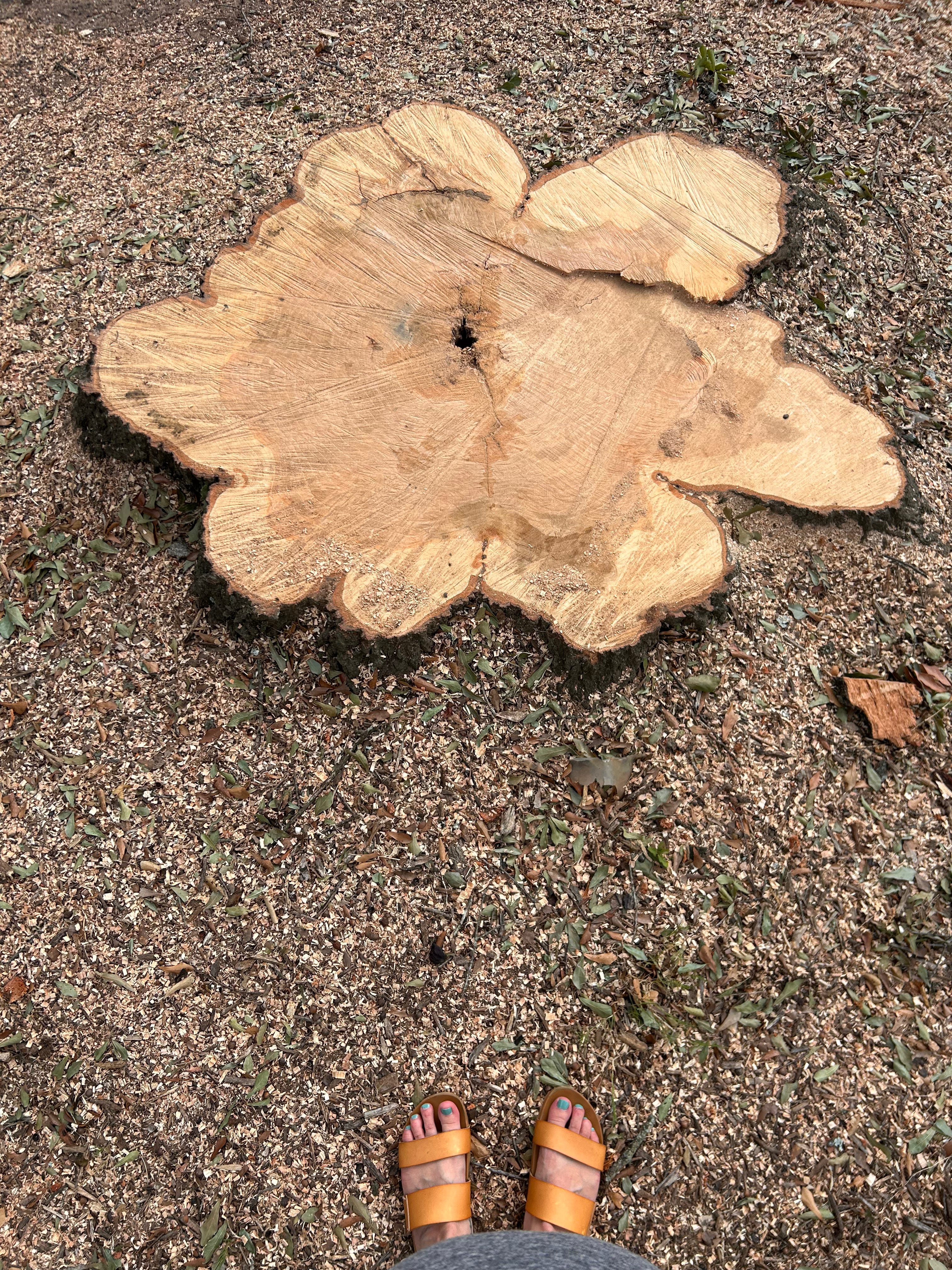
I couldn’t stop the tears from flowing. I kept looking out the front windows and noticing how much the light had changed, how the sky looked different, how I could see straight across the road to our neighbor’s house without obstruction. I missed the speckled light covering our driveway. I missed the protective canopy it provided over our yard and street. I felt weirdly exposed, like an umbrella that had covered our house was suddenly snapped up.
I called my husband weeping.
“Are you sure this was the right thing to do? Was the tree even really dying?” I choked through tears.
“This isn’t really about the tree, is it…?” He asked tentatively. I wasn’t sure what he could mean.
“I mean it just looked so healthy, how could it really have needed to come down?! It was such a protective pillar for our yard and our neighborhood…”
I began to think of my uncle Scot.
My uncle Scot, my mom’s younger brother, died at 59 of stage 4 renal carcinoma. From diagnosis to death was only about two weeks. His death sent a shockwave through our family. I hadn’t known how to grapple with it; none of us did.
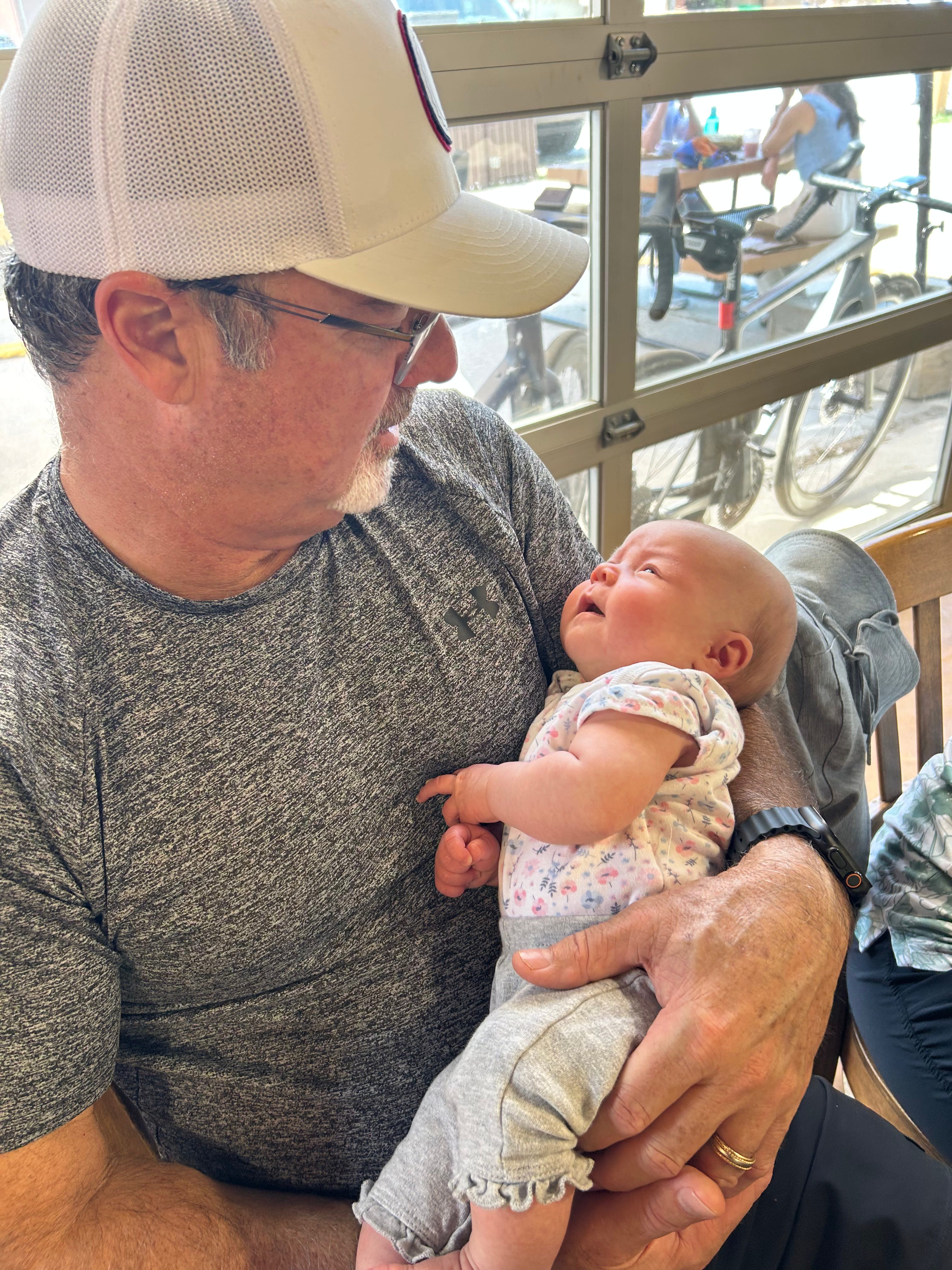
Scot was the uncle I had spent the most time with throughout my life, but it’s not like we talked every week or really kept in touch all that much. But Scot was just there. His presence was comforting. I always knew you could call him if I was in trouble. He’d often pull me aside, and then eventually me and my husband, at family gatherings and say in a kind, firm tone, “If you ever need anything, and you don’t wanna talk to your mom and dad about it, you can always call me.” His presence was a protective shade over our whole family.
Even as the younger son, Scot was a caregiver for my grandparents, and he was the man we all counted on to make hard decisions. He was steady. He was strong.
His cancer diagnosis took us all by surprise. He never showed any major symptoms—a bit of mysterious respiratory distress for a few months before, but he’d found ways to manage it. Then suddenly, I got a call that he’d been hospitalized and put on oxygen because he’d been struggling to breathe. Then came the biopsies and scans and tests and results…stage 4. Rapidly progressing. Seriously low rate of survival. Treatment options. Hospice options. Dying. Dead. Gone.
I wept when I saw the stump of that tree. It’s not like I thought about the tree every day, or even really noticed it. But it was there, always. Its shade offered comfort and relief every afternoon. I’ll miss hearing its rustling leaves on quiet summer evenings sitting on the front porch. I’ll miss pointing out the squirrels to my daughter Olivia. I’ll miss her finding acorns in the cracks of the sidewalk. I’ll miss filling up the baby pool in its shade to get some relief from the summer heat.
But the hardest thing was that I hadn’t said goodbye. I left in the morning and came home and it was gone.
Scot died while my family was away on a trip to Maine. His diagnosis and dying had happened quickly; it never seemed like it was progressing fast enough for us to need to change our plans. And then suddenly he was gone.
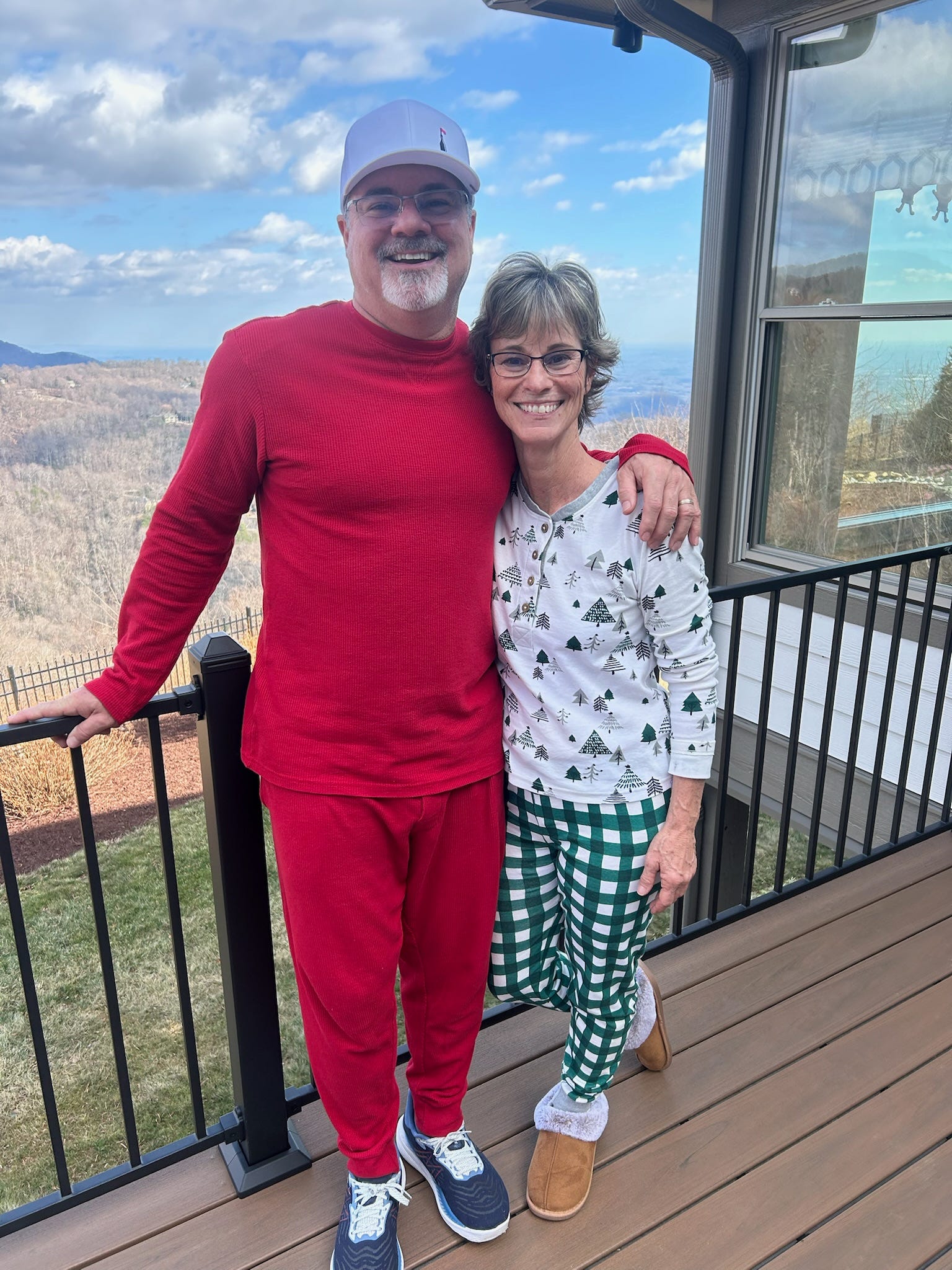
The last time I spent with my uncle Scot, we celebrated Christmas together, a few months before he died. We didn’t know it, but it’s likely that his cancer was already spreading. He wore bright red pajamas on Christmas morning while we all unwrapped gifts. He played with my daughter Olivia as if she were his own granddaughter. It was a precious time, now bundled up together with all the precious memories I have of my uncle Scot. He was a strong and gentle presence in our family, and we miss him dearly.
The tree that once stood in our front yard is now a pile of dirt. My daughter Olivia likes to dig in it, filling up a bucket with rocks and dirt. She may not remember the tree that once stood there, but I hope to tell her all about it one day—how it covered our yard with shade, how it stood as a protective pillar on our street, how it gave her a place to play beneath its branches.